Showing posts with label science. Show all posts

Tuesday, October 29, 2013

250x faster than 'superfast' broadband: UK researchers in 'Li-Fi' connectivity breakthrough


Via: http://www.itproportal.com/
 
Internet connectivity through light fidelity (Li-Fi) has reached a new milestone, according to UK researchers.

A team of researchers from the universities of Oxford, Cambridge, Edinburgh, St Andrews and Strathclyde working on the Ultra-Parallel Visible Light Communications Project claim to have reached record data transmission speeds of 10.5 Gbit/s via Li-Fi.

Li-fi works by utilising specialised LED bulbs to transmit data through parallel streams of light that are undetectable to the human eye.

"If you think of a shower head separating water out into parallel streams, that's how we can make light behave," said Professor Harald Haas, a German physicist and one of the project leaders at the University of Edinburgh.


Saturday, October 19, 2013

Are We Observing Extraterrestrial Intelligence Without Realizing It?

Philosophy and the physical sciences have a long and interesting past spanning the entirety of human history. Philosophers have played the role of logically deducing the existence of certain physical phenomena that were untestable. Physical scientists have then either empirically confirmed or refuted the philosophical speculation proposed when the necessary technology and/or method were developed. 

Sometimes the philosophical speculations failed to describe the nature of reality, like the Ancient Greek proposition that the heavens were composed of a fifth element: aether . However, on several occasions, the philosophical speculations turned out to be quite exact. For example, in the 4th century B.C.E. philosopher Democritus deduced that the universe was composed of indivisible...

Friday, October 18, 2013

Rare skull sparks human evolution controversy


Fragments of humans' ancient relatives are scattered across the globe. Sometimes a tooth or a few bones are all we have to tell us about an entire species closely related to humans that lived thousands or millions of years ago.

So when anyone finds a complete skull of a possible human ancestor, paleoanthropologists rejoice. But with new knowledge comes new controversy over a fossil's place in our species' very fuzzy family tree.

In the eastern European nation of Georgia, a group of researchers has excavated a 1.8 million-year-old skull of an ancient human relative, whose only name right now is Skull 5. They report their findings in the journal Science, and say it belongs to our genus, called Homo.

"This is most complete early Homo skull ever found in the world," said lead study author David Lordkipanidze, researcher at the Georgian National Museum in Tbilisi.

Wednesday, October 16, 2013

Jellyfish are taking over the seas, and it might be too late to stop them


Last week, Sweden’s Oskarshamn nuclear power plant, which supplies 10% of the country’s energy, had to shut down one of its three reactors after a jellyfish invasion clogged the piping of its cooling system. The invader, a creature called a moon jellyfish, is 95% water and has no brain. Not what you might call menacing if you only had to deal with one or two.

En masse, jellyfish are a bigger problem. “The [moon jellyfish swarm] phenomenon…occurs at regular intervals on Sweden’s three nuclear power plants,” says Torbjörn Larsson, a spokesperson for E.ON, which owns Oskarshamn. Larsson wouldn’t say how much revenue the shutdown cost his company, but noted that jellyfish also caused a shutdown in 2005.

Coastal areas around the world have struggled with similar jellyfish blooms, as these population explosions are known. These blooms are increasing in intensity, frequency, or duration, says Lucas Brotz, a jellyfish expert at the University of British Columbia.


Jellyfish are taking over the seas, and it might be too late to stop them

Monday, October 14, 2013

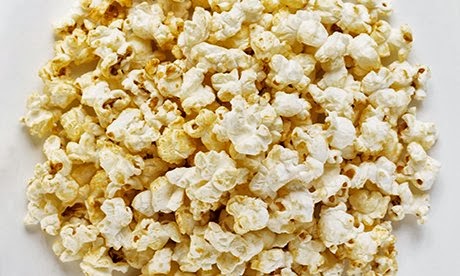
Eating popcorn in the cinema makes people immune to advertising


Study by Cologne University concludes that chewing makes advertising ineffective.


Eating popcorn in the cinema may be irritating not just for fellow movie goers, but for advertisers: a group of researchers from Cologne University has concluded that chewing makes us immune to film advertising.

The reason why adverts manage to imprint brand names on our brains is that our lips and the tongue automatically simulate the pronunciation of a new name when we first hear it. Every time we re-encounter the name, our mouth subconsciously practices its pronunciation.

However, according to the study published in the Journal of Consumer Psychology, this "inner speech" can be disturbed by chewing, rendering the repetition effect redundant.

Thursday, September 26, 2013

Scientists create never-before-seen form of matter


Harvard and MIT scientists are challenging the conventional wisdom about light, and they didn't need to go to a galaxy far, far away to do it.

Working with colleagues at the Harvard-MIT Center for Ultracold Atoms, a group led by Harvard Professor of Physics Mikhail Lukin and MIT Professor of Physics Vladan Vuletic have managed to coax photons into binding together to form molecules – a state of matter that, until recently, had been purely theoretical. The work is described in a September 25 paper in Nature.

Read More

Tuesday, September 24, 2013

CrossFit’s Dirty Little Secret — Health & Fitness


A Tale of Rhabdomyolysis

One day, a very fit, young, physical therapist colleague of mine went to CrossFit. She had been many times before. On this warm Texas evening, she performed a partner workout, where each would trade off performing sets of 10 for each exercise. The workout consisted of pushups. Lots of them. Copious amounts of overhead press were also included.


So what is rhabdomyolysis exactly? Under extreme conditions your muscles cells explode. They die. They leach protein out into the blood stream, including one form called myoglobin. Ever stalwart, your kidneys take up the job of clearing these dangerous proteins from the blood. Why? It’s just what they do. Unfortunately, myoglobin proteins aren’t designed to be in the blood in the first place and they can easily overload the kidney. This can produce injury or death to all or part of the kidney in a short amount of time, and is potentially lethal. Locally, the muscles are left damaged and dying. Swelling ensues and weakness occurs as pressure builds around the remaining muscle cells. Your body’s systems that normally can assist with this local muscle damage are now offline trying to help you not die. If you get to this stage, you’re in serious trouble.


New MIT course aims to make science fiction technology into a reality

 
Mad Scientist 101: A New MIT Class Aims To Turn Science Fiction Tech Into The Real Thing

A new class at MIT is devoted to building functional prototypes of technology from classic sci-fi works like Hitchhiker's Guide to the Galaxy, Transmetropolitan, and Flowers for Algernon.

Scientists and engineers, as a whole, love science fiction. At a recent technology conference I went to, a sedate collection of engineers suddenly jumped into animated discussion when one said Star Trek's teleporter would be impossible. Now a new college class is devoted to turning science fiction technology into real-life products.


Read More

Monday, September 9, 2013

Make a Moss Terrarium for Low-Maintenance Greenery


If you want some greenery in your home or office but you're not too keen on, or skilled at, tending a high-maintenance plant, a moss terrarium is a hassle-free bit of greenery you practically have to try to kill.

Saturday, August 3, 2013

A week's worth of camping synchs internal clock to sunrise and sunset, CU-Boulder study finds


Spending just one week exposed only to natural light while camping in the Rocky Mountains was enough to synch the circadian clocks of eight people participating in a University of Colorado Boulder study with the timing of sunrise and sunset.

The study, published online today in the journal Current Biology, found that the synchronization happened in that short period of time for all participants, regardless of whether they were early birds or night owls during their normal lives.

"What's remarkable is how, when we're exposed to natural sunlight, our clocks perfectly become in synch in less than a week to the solar day," said CU-Boulder integrative physiology Professor Kenneth Wright, who led the study.

Electrical lighting, which became widely available in the 1930s, has affected our internal circadian clocks, which tell our bodies when to prepare for sleep and when to prepare for wakefulness. The ability to flip a switch and flood a room with light allows humans to be exposed to light much later into the night than would be possible naturally.

Even when people are exposed to electrical lights during daylight hours, the intensity of indoor lighting is much less than sunlight and the color of electrical light also differs from natural light, which changes shade throughout the day.

To quantify the effects of electrical lighting, a research team led by Wright, who also is the director of CU-Boulder's Sleep and Chronobiology Laboratory, monitored eight participants for one week as they went about their normal daily lives. The participants wore wrist monitors that recorded the intensity of light they were exposed to, the timing of that light, and their activity, which allowed the researchers to infer when they were sleeping.

At the end of the week, the researchers also recorded the timing of participants' circadian clocks in the laboratory by measuring the presence of the hormone melatonin. The release of melatonin is one of the ways our bodies signal the onset of our biological nighttime. Melatonin levels decrease again at the start of our biological daytime.

The same metrics were recorded during and after a second week when the eight participants—six men and two women with a mean age of 30—went camping in Colorado's Eagles Nest Wilderness. During the week, the campers were exposed only to sunlight and the glow of a campfire. Flashlights and personal electronic devices were not allowed.

On average, participants' biological nighttimes started about two hours later when they were exposed to electrical lights than after a week of camping. During the week when participants went about their normal lives, they also woke up before their biological night had ended.

After the camping trip—when study subjects were exposed to four times the intensity of light compared with their normal lives—participants' biological nighttimes began near sunset and ended at sunrise. They also woke up just after their biological night had ended. Becoming in synch with sunset and sunrise happened for all individuals even though the measurements from the previous week indicated that some people were prone to staying up late and others to getting up earlier.

"When people are living in the modern world—living in these constructed environments—we have the opportunity to have a lot of differences among individuals," Wright said. "Some people are morning types and others like to stay up later. What we found is that natural light-dark cycles provide a strong signal that reduces the differences that we see among people—night owls and early birds—dramatically."

Our genes determine our propensity to become night owls or early birds in the absence of a strong signal to nudge our internal circadian clocks to stay in synch with the solar day, Wright said.

The new study, which demonstrates just how strong of a signal exposure to natural light is, offers some possible solutions for people who are struggling with their sleep patterns. For example, people who naturally drift toward staying up late may also find that it's more difficult to feel alert in the morning—when melatonin levels may indicate they're still in their biological nighttimes—at work or in school.

To combat a person's genetic drift toward later nights, exposure to more sunlight in the morning and midday could help nudge his or her internal clock earlier. Also, dimming electrical lights at night, forgoing late-night TV and cutting out screen time with laptops and other personal electronic devices also may help internal circadian clocks stay more closely attuned with the solar day, Wright said.

Via: http://www.eurekalert.org

Thursday, August 1, 2013

Harvard creates brain-to-brain interface, allows humans to control other animals with thoughts alone


Researchers at Harvard University have created the first noninvasive brain-to-brain interface (BBI) between a human… and a rat. Simply by thinking the appropriate thought, the BBI allows the human to control the rat’s tail. This is one of the most important steps towards BBIs that allow for telepathic links between two or more humans — which is a good thing in the case of friends and family, but terrifying if you stop to think about the nefarious possibilities of a fascist dictatorship with mind control tech.

In recent years there have been huge advances in the field of brain-computer interfaces, where your thoughts are detected and “understood” by a sensor attached to a computer, but relatively little work has been done in the opposite direction (computer-brain interfaces). This is because it’s one thing for a computer to work out what a human is thinking (by asking or observing their actions), but another thing entirely to inject new thoughts into a human brain. To put it bluntly, we have almost no idea of how thoughts are encoded by neurons in the brain. For now, the best we can do is create a computer-brain interface that stimulates a region of the brain that’s known to create a certain reaction — such as the specific part of the motor cortex that’s in charge of your fingers. We don’t have the power to move your fingers in a specific way — that would require knowing the brain’s encoding scheme — but we can make them jerk around.

Which brings us neatly onto Harvard’s human-mouse brain-to-brain interface. The human wears a run-of-the-mill EEG-based BCI, while the mouse is equipped with a focused ultrasound (FUS) computer-brain interface (CBI). FUS is a relatively new technology that allows the researchers to excite a very specific region of neurons in the rat’s brain using an ultrasound signal. The main advantage of FUS is that, unlike most brain-stimulation techniques, such as DBS, it isn’t invasive. For now it looks like the FUS equipment is fairly bulky, but future versions might be small enough for use in everyday human CBIs. (See: Real-life Avatar: The first mind-controlled robot surrogate.)


With the EEG equipped, the BCI detects whenever the human looks at a specific pattern on a computer screen. The BCI then fires off a command to rat’s CBI, which causes ultrasound to be beamed into the region of the rat’s motor cortex that deals with tail movement. As you can see in the video above, this causes the rat’s tail to move. The researchers report that the human BCI has an accuracy of 94%, and that it generally takes around 1.5 seconds for the entire process — from the human deciding to look at the screen, through to the movement of the rat’s tail. In theory, the human could trigger a rodent tail-wag by simply thinking about it, rather than having to look at a specific pattern — but presumably, for the sake of this experiment, the researchers wanted to focus on the FUS CBI, rather than the BCI.

Moving forward, the researchers now need to work on the transmitting of more complex ideas, such as hunger or sexual arousal, from human to rat. At some point, they’ll also have to put the FUS CBI on a human, to see if thoughts can be transferred in the opposite direction. Finally, we’ll need to combine an EEG and FUS into a single unit, to allow for bidirectional sharing of thoughts and ideas. Human-to-human telepathy is the most obvious use, but what if the same bidirectional technology also allows us to really communicate with animals, such as dogs? There would be huge ethical concerns, of course, especially if a dictatorial tyrant uses the tech to control our thoughts — but the same can be said of almost every futuristic, transhumanist technology.

Tuesday, July 23, 2013

Singing Happy Birthday makes cake taste better

Singing 'Happy Birthday' before having a slice of cake makes it taste better, scientists claim.


Rituals such as saying grace, making a birthday wish while blowing out candles or the ceremonial cutting of the cake before eating can enhance the flavour of the food, according to a new study.


The study, by researchers from Minnesota University, could explain why we have so many unusual customs and quirky habits when it comes to eating and drinking.


Professor Kathleen Vohs, who led the study, said: "Whenever I order an espresso I take a sugar packet and shake it, open the packet and pour a teeny bit of sugar in and then taste.


"It's never enough sugar so I then pour about half of the packet in. The thing is this isn't a functional ritual – I should just skip right to pouring in half the packet."


To learn more about the link between rituals and food, the researchers carried out a series of experiments which they described in the Psychological Science journal.


In one test some participants were given a piece of chocolate and told to break it in half without unwrapping it first, and then eat one half before unwrapping the other and eating it too.

Those who had performed the ritual rated the chocolate more highly, savoured it more and were willing to pay more for it than a separate group who were allowed to eat it however they wanted.

A second experiment using carrots found that the anticipation of eating the vegetable following a ritual improved their taste, with people enjoying them more the longer they waited to eat them.

In the final experiments the researchers showed that watching someone else methodically mix lemonade does not make it taste any better, suggesting that personal involvement is key.

They also found "intrinsic interest" – the fact rituals draw people into what they are doing – fully accounted for the positive effects they have on our eating experiences.

While these could seem small or mundane the effects they produce are quite tangible. And while rituals are common before mealtimes they could play a role in other situations.

Prof Vohs said: "We are thinking of getting patients to perform rituals before a surgery and then measuring their pain postoperatively and how fast they heal."


Monday, July 22, 2013

Trailer for 'Cosmos: A Spacetime Odyssey', Carl Sagan's legacy with Neil deGrasse Tyson


Cosmos: A Space-Time Odyssey is an upcoming American documentary television series. It is a follow-up to Cosmos: A Personal Voyage, which was presented by Carl Sagan. The new series' presenter will be Neil deGrasse Tyson. The executive producers are Seth MacFarlane and Ann Druyan, Sagan's widow. It was originally announced that it would premiere in the 2012–13 United States network television schedule, but a Twitter update from Neil deGrasse Tyson in June 2012 indicates a Q2 2014 release. Episodes will premiere on Fox and also air on National Geographic Channel on the same night.


Monday, July 15, 2013

Doctor Who: 50 Years of Humanism


For 50 years, "Doctor Who" has been more than just delectable entertainment. It has been a consistent beacon of humanism, championing the value of the individual, charging us all with resisting those who oppress the weak, and revealing the universe to be a place of awe and wonder.


Tuesday, July 9, 2013

'Mythical' corpse-eating fly rediscovered in Europe

THIS species of fly was declared extinct more than 100 years ago. Here's the problem. It's still buzzing around, feasting merrily on decaying corpses.

The 'bone-skipper', or Centrophlebomyia anthropophaga if you're in a scientific mood, once developed quite a reputation for eating human remains. Not fresh remains, mind you. These flies prefer bodies in advanced stages of decomposition.

Thankfully, their diet isn't exclusively human. Bone-skippers love to pick over large animals, and researchers believe they flourished several centuries ago when those animals were more plentiful.

Incidentally, the flies are nicknamed bone-skippers because of the manner in which they skip along the bones of a decaying body, making it look "alive with larvae". My, what a beautiful image.

Bone-skippers supposedly disappeared about 160 years ago, and achieved near-mythical status in the scientific community. Yes, they have myths about flesh-eating flies.

But to nobody's great delight, the flies have recently been rediscovered in Europe, LiveScience reports.

Pierfilippo Carretti, a researcher at the Sapienza University of Rome and presumably the most Italian man alive, has worked with his colleagues to establish a "type-species" for the fly. That's the super-long scientific name mentioned above, and it allows researchers to classify and study the species with greater ease.

You can read all about Centrophlebomyia anthropophaga in Carretti's study here.

Monday, July 8, 2013

Does Being a Bookworm Boost Your Brainpower in Old Age?

MINNEAPOLIS – New research suggests that reading books, writing and participating in brain-stimulating activities at any age may preserve memory. The study is published in the July 3, 2013, online issue of Neurology®, the medical journal of the American Academy of Neurology. 

“Our study suggests that exercising your brain by taking part in activities such as these across a person’s lifetime, from childhood through old age, is important for brain health in old age,” said study author Robert S. Wilson, PhD, with Rush University Medical Center in Chicago. 

For the study, 294 people were given tests that measured memory and thinking every year for about six years before their deaths at an average age of 89. They also answered a questionnaire about whether they read books, wrote and participated in other mentally stimulating activities during childhood, adolescence, middle age and at their current age. 

After they died, their brains were examined at autopsy for evidence of the physical signs of dementia, such as lesions, brain plaques and tangles. 

The research found that people who participated in mentally stimulating activities both early and late in life had a slower rate of decline in memory compared to those who did not participate in such activities across their lifetime, after adjusting for differing levels of plaques and tangles in the brain. Mental activity accounted for nearly 15 percent of the difference in decline beyond what is explained by plaques and tangles in the brain. 

“Based on this, we shouldn’t underestimate the effects of everyday activities, such as reading and writing, on our children, ourselves and our parents or grandparents,” said Wilson. 

The study found that the rate of decline was reduced by 32 percent in people with frequent mental activity in late life, compared to people with average mental activity, while the rate of decline of those with infrequent activity was 48 percent faster than those with average activity. 

The study was supported by the National Institute on Aging and the Illinois Department of Public Health.

Saturday, July 6, 2013

10 mindblowingly futuristic technologies that will appear by the 2030s


1. Artificially Intelligent Personal Assistants

I’ve been impatiently waiting for this one for quite some time now. Microsoft got the ball rolling on this concept with Clippy, the office assistant that proved to be more annoying than useful. More recently, Apple developed SIRI for its iPhone, an intelligent assistant that can respond to specific language cues and access the Internet. But this is nothing compared to what’ll be available two decades from now.
10 mindblowingly futuristic technologies that will appear by the 2030s
Looking ahead, we can expect our personal assistants to fully respond to natural language, including colloquialisms and our personal idiosyncrasies. And owing to ubiquitous computing (which we’ll look at next), our personal assistants will be accessible to us 24/7.
What’s more, these agents will exhibit an uncanny level of general intelligence. We’ll even be able to have conversations with them. They will know everything about us, including our behaviors, our tendencies, our preferences, and our typical ways of responding to certain situations. Accordingly, they’ll be our virtual clones. In essence, they’ll be our proxy selves, representing us on the Internet and in the real world by taking the form of telepresent holographic avatars. They’ll write emails for us, book appointments, perform menial thought tasks, and even anticipate our needs. Of course, we’ll still be responsible for the decisions they make on our behalf — so we’ll need to be careful about the degree of autonomy we give our mind clones.

2. Computers Are Everywhere — But Unseen

As noted, ubiquitous computing — also known as “pervasive computing” and “everyware” — is coming. Already today we have computers in our cars, our phones, our toys, and even our fridges. But they’re still very obvious. We often have to hold them. Or use keyboards to input information into them.

10 mindblowingly futuristic technologies that will appear by the 2030s These devices, however, are getting steadily smaller owing to the miniaturization revolution that’s in full swing (e.g. the shift towards microelectromechanical systems, or MEMS). In short order we’ll be living in a Rainbow’s End world, where information processing devices will be virtually everywhere, but completely invisible — absorbed into our surroundings. These computers will be in our clothes, our fashion accessories, and even in our contact lenses. And to use them we’ll use natural language and haptic technologies (i.e. tactile feedback). Or better yet, these devices will be endowed with a certain level of “ambient intelligence” to help them perform autonomously under specific conditions. So by the 2030s we’ll be completely surrounded by computers, but utterly unaware of their presence.

3. Virtual Animals with Digital Minds

Whole brain emulations of human minds are quite a ways off, and likely won’t appear until the second half of the 21st Century. But in the stage leading up to this we’ll be able to emulate the brains of much simpler organisms. Already today there’s the OpenWorm project, an effort to digitize the brain of a nematode worm.
10 mindblowingly futuristic technologies that will appear by the 2030s
Within the next two decades, we will most certainly be able to emulate the brains of other organisms, like ants and bees. And who knows, by this point we might even be able to start emulating the brains of simple mammals, like mice. But by virtue of doing so, we will have created virtual animals who essentially “live” inside a computer. And someday, perhaps even by the 2030s, these digital brains will be uploaded to robotic avatars.

4. The First Sanctioned Megascale Geoengineering Project

The effects of climate change are getting increasingly hard to ignore, whether they manifest as superstorms, historically low levels of sea ice, rampant wildfires, or record temperatures. Whether we like it or not, we will embark on geoengineering projects in the near future. And indeed, the conversations have already started. 

10 mindblowingly futuristic technologies that will appear by the 2030s
Take, for example, the 25 scientists who recently declared that the time has come to start working on actual geoengineering solutions to reverse the effects of rampant carbon emissions. Their particular solution is cloud whitening — the seeding of marine stratocumulus clouds with copious amounts of tiny sea water particles. They’re pretty much ready to get started, but they’ll need international support to do it legally. Others have even started to do it illegally.

5. An Interplanetary Internet

This one’s fairly straightforward, but no less profound. Someone from Earth will reach Mars by the early 2030s — whether it be private enterprise or a government agency. At least we freakin’ hope so! But regardless of who gets there first, one of the first things they’ll do is set up an Internet connection with Earth. And why not? The explorers — or settlers, if they’re part of the Mars One project — will both want and need to access and share information. Oh, and they’ll probably want to purchase something while they’re there when supplies run low. 

6. The First True Anti-Aging Intervention

There are a crap-ton of products on the market that claim to be “anti-aging,” but each and every one of them is either cosmetic or a total scam. There is nothing available right now that can either slow down or reverse the effects of aging, not even resveratrol pills or rapamycin.
But this is set to change by the 2030s. Futurists and gerontologists aren't entirely sure what form this intervention could take. It could be a genetic tweak, not unlike the one Cynthia Kenyon performed on roundworms to extend their lifespans by more than half. And indeed, there are efforts currently underway to map the genetic constitutions of supercentenarians to isolate the factors that make them so robust. It might involve therapies to restore the length of our telomeres, or replenish our mitochondria. Or it could draw from any number of experiments currently being conducted on mice. 

7. Autonomous Robots with a License to Kill

The rise of autonomous killing machines is a grim and frightening prospect, but it’s virtually guaranteed to happen.
10 mindblowingly futuristic technologies that will appear by the 2030s
We already have various levels of autonomy in a number of weapons systems, including cruise and patriot missiles. The Aegis Combat System, which is found aboard naval ships, has an autonomous mode in which it uses powerful computers and radars to track and guide weapons to destroy enemy targets. There’s also Samsung Techwin's remote-operated sentry bot — which is currently deployed in the Korean DMZ. And the U.S. packbot/REDOWL system could be easily modified to take out snipers on its own.


8. Our Very Own Lab-Grown Organs (and Meat)

We are in the midst of the biotechnology revolution, the benefits of which are finally starting to emerge. Personalized medicine will emerge in the coming decades, where physicians will be able to prescribe medicines tailored specifically to our genetic constitutions. Biologists are also exceedingly close to being able to generate differentiated tissue from our very own stem cells. This will eventually allow us to grow our very own organs, including the heart — no donors needed, and with virtually no chance of rejection. 

9. Personal Fabricators in Every Home

Okay, maybe not every home — but it’s certainly poised to be the kind of thing that may be as ubiquitous as DVD players and traditional 2D printers are today. And there’s very little doubt that 3D printers are poised to be as disruptive as the techno-cognoscenti are predicting.
Indeed, the ability to produce our own products in our very own homes will upset traditional models of manufacturing. At first, we’ll have to pay for these items to download the specs. But eventually, owing to the open source movement, many of these items will be shared and available for free.
And in addition to day-to-day items and electronics, these printers could generate handguns (which is not such a hot idea), vaccines (we won’t have to leave our homes to get inoculated during a pandemic), self-assembling robots, and androids. And eventually, these printers won’t need human guidance at all. 

10. The Oceans Will Quench the World’s Thirst

Industrial-scale desalination is poised to make an appearance by the 2030s. Owing to advancements in solar power, namely the development of affordable and scalable photovoltaic cells, we will be able to build massive concentrated solar power plants (CSPs) that utilize the residual heat to strip ocean water of its salt. Experts predict that the growing freshwater deficits could be increasingly covered starting in the 2020s, and possibly as late as the 2030s. The spread of CSP desalination plants will likely reduce non-sustainable water supply and inspire the development of most of potable water production by the year 2030 and afterwards.

Thursday, July 4, 2013

Exercise reorganizes the brain to be more resilient to stress


Physical activity reorganizes the brain so that its response to stress is reduced and anxiety is less likely to interfere with normal brain function, according to a research team based at Princeton University.

The researchers report in the Journal of Neuroscience that when mice allowed to exercise regularly experienced a stressor — exposure to cold water — their brains exhibited a spike in the activity of neurons that shut off excitement in the ventral hippocampus, a brain region shown to regulate anxiety.

These findings potentially resolve a discrepancy in research related to the effect of exercise on the brain — namely that exercise reduces anxiety while also promoting the growth of new neurons in the ventral hippocampus. Because these young neurons are typically more excitable than their more mature counterparts, exercise should result in more anxiety, not less. The Princeton-led researchers, however, found that exercise also strengthens the mechanisms that prevent these brain cells from firing.

The impact of physical activity on the ventral hippocampus specifically has not been deeply explored, said senior author Elizabeth Gould, Princeton's Dorman T. Warren Professor of Psychology. By doing so, members of Gould's laboratory pinpointed brain cells and regions important to anxiety regulation that may help scientists better understand and treat human anxiety disorders, she said.

From an evolutionary standpoint, the research also shows that the brain can be extremely adaptive and tailor its own processes to an organism's lifestyle or surroundings, Gould said. A higher likelihood of anxious behavior may have an adaptive advantage for less physically fit creatures. Anxiety often manifests itself in avoidant behavior and avoiding potentially dangerous situations would increase the likelihood of survival, particularly for those less capable of responding with a "fight or flight" reaction, she said.

"Understanding how the brain regulates anxious behavior gives us potential clues about helping people with anxiety disorders. It also tells us something about how the brain modifies itself to respond optimally to its own environment," said Gould, who also is a professor in the Princeton Neuroscience Institute.

The researchers found that running prevents the activation of new neurons in response to stress. In sedentary mice, stress activated new neurons in the hippocampus (red and green cell above), but after 6 weeks of running, the stress-induced activation of both new and mature neurons disappeared. The red cells are new neurons and the green cells are activated mature neurons. (Photo courtesy of the Gould laboratory)

The research was part of the graduate dissertation for first author Timothy Schoenfeld, now a postdoctoral fellow at the National Institute of Mental Health, as well as part of the senior thesis project of co-author Brian Hsueh, now an MD/Ph.D. student at Stanford University. The project also included co-authors Pedro Rada and Pedro Pieruzzini, both from the University of Los Andes in Venezuela.

For the experiments, one group of mice was given unlimited access to a running wheel and a second group had no running wheel. Natural runners, mice will dash up to 4 kilometers (about 2.5 miles) a night when given access to a running wheel, Gould said. After six weeks, the mice were exposed to cold water for a brief period of time.

The brains of active and sedentary mice behaved differently almost as soon as the stressor occurred, an analysis showed. In the neurons of sedentary mice only, the cold water spurred an increase in "immediate early genes," or short-lived genes that are rapidly turned on when a neuron fires. The lack of these genes in the neurons of active mice suggested that their brain cells did not immediately leap into an excited state in response to the stressor.

Instead, the brain in a runner mouse showed every sign of controlling its reaction to an extent not observed in the brain of a sedentary mouse. There was a boost of activity in inhibitory neurons that are known to keep excitable neurons in check. At the same time, neurons in these mice released more of the neurotransmitter gamma-aminobutyric acid, or GABA, which tamps down neural excitement. The protein that packages GABA into little travel pods known as vesicles for release into the synapse also was present in higher amounts in runners.

The anxiety-reducing effect of exercise was canceled out when the researchers blocked the GABA receptor that calms neuron activity in the ventral hippocampus. The researchers used the chemical bicuculine, which is used in medical research to block GABA receptors and simulate the cellular activity underlying epilepsy. In this case, when applied to the ventral hippocampus, the chemical blocked the mollifying effects of GABA in active mice.

The paper, "Physical Exercise Prevents Stress-Induced Activation of Granule Neurons and Enhances Local Inhibitory Mechanisms in the Dentate Gyrus," was published May 1 in the Journal of Neuroscience. This research was supported by National Institute of Mental Health grant MH091567.


Tuesday, July 2, 2013

Astronomers Identify 514 of the Most Powerful Objects in the Universe, Have No Clue What 65 of Them Are


A new map of the universe created with data from the Fermi Space Telescope has identified the 514 most highly energetic objects in the known universe. The slightly unnerving part of that news — researchers have exactly no idea what 65 of those objects, which are throwing off more than 10 gigaelectronvolts of gamma ray energy, are. These sources could be standard high energy objects — like blazars — that simply haven’t been properly identified yet, or they could be an entirely new class of object never before seen on the cosmic landscape.

One explanation for the unidentified energy sources — which throw off huge amounts of gamma rays, but are not associated with radio or optical emissions, could be dwarf galaxies composed of dark matter. If that’s the case, learning more about these mystery objects could help us understand dark matter more thoroughly. Of course, the objects could also just be standard high energy objects that have yet to be properly identified. Also, they could be Galactuses, in which case we should probably just leave them alone, because staring at them too closely is a good way to get our whole planet eaten.

You can take a look at the new study prior to its publication in the Astrophysical Journal over on Arxiv right now.
 

Fat Cells Feel the Cold, Burn Calories for Heat


Transforming fat cells into calorie-burning machines may sound like the ultimate form of weight control, but the idea is not as far-fetched as it sounds. Unexpectedly, some fat cells directly sense dropping temperatures and release their energy as heat, according to a new study; that ability might be harnessed to treat obesity and diabetes, researchers suggest.

Fat is known to help protect animals from the cold—and not only by acting as insulation. In the early 1990s, scientists studying mice discovered that cold temperatures trigger certain fat cells, called brown adipose tissue, to release stored energy in the form of heat—to burn calories, in other words. Researchers have always assumed this mechanism was an indirect response to the physiological stress of cold temperatures, explains cell biologist Bruce Spiegelman of Harvard Medical School, Boston. The activation of brown fat seems to start with sensory neurons throughout the body informing the brain of a drop in temperature. In response the brain sends out norepinephrine, the chief chemical messenger of the sympathetic nervous system, which mobilizes the body to cope with many situations. In experimental animals, stimulating norepinephrine receptors triggered brown adipose tissue to release its energy and generate heat, while animals bred to be missing these receptors were unable to mount the same fat cell response.

People also have brown adipose tissue that generates heat when the body is cold. And unlike white fat, which builds up around the abdomen and contributes to many disorders including heart disease and diabetes, this brown fat is found in higher proportions in leaner people and seems to actively protect against diabetes.

In brown fat, the heat-generating process depends on a protein called UCP1; the protein is also thought to be central in brown fat's ability to prevent diabetes. Researchers are now exploring ways of activating this molecular pathway. But in trying to figure out exactly how fat cells respond to the body being cold, Spiegelman and colleagues discovered that plain old "white" fat cells have a few surprises left. In a study appearing online today in the Proceedings of the National Academy of Sciences, the researchers exposed various kinds of fat cells to cold temperatures directly. "We were a little surprised that no one had tried this before," Spiegelman says.

The researchers cooled several types of lab-grown human fat cells—brown, white and "beige" (white adipose tissue with some brown cells mixed in)—to temperatures between 27˚ and39˚C for four hours, eight hours, or up to ten days. White fat cells and "beige" cells (white adipose tissue with some brown cells mixed in) responded to cooling in dramatic fashion. In these cells, levels of the UCP1 were doubled by 8 hours after the treatment. The change in UCP1 also proved to be reversible: Its levels returned to normal once the cells' temperature was lowered to 37 degrees. But in brown fat cells, no induction of the protein was observed, indicating that cold temperatures don't mobilize these cells by flipping this particular switch.

The researchers also found that white fat cells obtained from mice lacking receptors for norepinephrine were still able to respond to cooling by turning on UCP1—showing that the heat-generating pathway is both specific to those fat cells and independent of the sympathetic nervous system .

The finding won't lead to an antifat pill any time soon, Spiegelman says, but it does give scientists new avenues to explore. "It's a piece of the basic science, adding to an evolving awareness that fat cells have many lives that we never knew about. Now we know they can sense temperature directly. The next question is, how do they do it, and can that ability be manipulated?"

"The paper is filling in an emerging picture that adipose tissue can be a more flexible, adaptive organ than we once thought," says Sven Enerbäck, a physician and adipose tissue researcher at the University of Gothenburg in Sweden. "The finding raises the question of whether this new pathway has widespread effects on the animal as a whole."

Finding that white fat cells directly detect and react to cold is a surprising development, notes cell biologist Peter Tontonoz of the University of California, Los Angeles, because it shows that the sympathetic nervous system isn't the whole story when it comes to heat generation by adipose tissue. He's curious whether the heat-generating pathway in white fat is a routine part of everyday temperature regulation. "Even if it isn't," he adds, "it could still be targeted by small molecules or other drugs." 


Source: http://news.sciencemag.org